
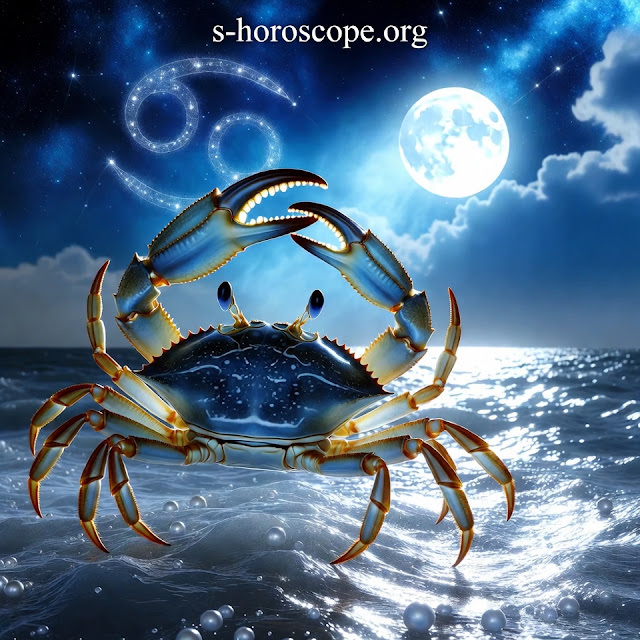

Cancer is often described as one of the most caring, protective, and emotionally sensitive zodiac signs.
They notice when someone is upset.
They remember small emotional details.
They may check in when others forget.
They often want the people they love to feel safe.
These qualities can make Cancer-style personalities deeply supportive.
But there is a difficult question hidden inside all that care:
Traditional astrology often associates Cancer with emotional sensitivity, family, home, protection, memory, nurturing, loyalty, and security.
Those qualities can create warmth and connection.
But when care becomes responsibility for everyone else’s emotional state, the result can be exhaustion.
A Cancer-style personality may begin the day feeling fine and end it carrying:
A friend’s sadness.
A partner’s stress.
A parent’s worry.
A sibling’s problem.
A colleague’s frustration.
And then wonder:
“Why do I feel so drained?”
This guide explores emotional boundaries through the Cancer archetype—how to care without absorbing everything, how to distinguish support from rescue, and why healthy boundaries can make compassion more sustainable.
Astrology note: Zodiac signs are not scientifically proven predictors of personality, emotional sensitivity, or behavior. This article uses traditional Cancer symbolism for entertainment, cultural interest, and self-reflection. Emotional patterns are influenced by personality, experiences, family dynamics, relationships, stress, environment, and many other real-world factors.
Cancer is generally associated with people born approximately between June 21 and July 22, although exact dates can vary slightly depending on the year and astrological system.
In traditional Western astrology, Cancer is a water sign associated with the Moon.
Astrological symbolism commonly connects Cancer with:
These associations help explain why Cancer is often portrayed as someone who notices emotional atmosphere quickly.
They may sense:
Someone’s tone has changed.
A family member is worried.
A friend is pretending to be okay.
A partner needs reassurance.
This awareness can be valuable.
But emotional awareness and emotional responsibility are not the same thing.
This distinction is the foundation of healthy emotional boundaries.
“I care about what you’re going through.”
“I must somehow make this okay for you.”
Caring allows another person to remain responsible for their own life.
Carrying can slowly make you feel responsible for:
Their mood.
Their choices.
Their healing.
Their reactions.
Their problems.
The difference may look small at first.
Over time, it becomes enormous.
A highly caring person can become very externally focused.
You walk into a room and immediately notice:
Who seems uncomfortable?
Who looks upset?
Who needs help?
Who is quiet?
Meanwhile, nobody asks:
That includes you.
A Cancer-style personality may become so skilled at reading others that personal emotional needs are noticed late.
Before solving anyone else’s emotional problem, pause for one minute.
Ask:
What am I feeling right now?
What happened before I started feeling this way?
What do I need?
Do not judge the answer.
You may need:
This is not selfish.
It is basic emotional awareness.
You cannot accurately set boundaries if you do not notice your own internal state.
Family-centered personalities often become emotional organizers.
You may think:
“If everyone is okay, I can relax.”
But there is a problem.
Everyone is rarely okay at exactly the same time.
Someone is worried.
Someone is frustrated.
Someone needs money.
Someone is disappointed.
Someone has a conflict.
If your peace depends on everyone else’s peace, your nervous system never gets a day off.
Imagine hosting a dinner.
As host, you may care whether guests are comfortable.
That is reasonable.
But imagine believing:
“Nobody is allowed to feel tired, annoyed, disappointed, quiet, or uncomfortable at any point.”
That responsibility would be impossible.
Relationships work similarly.
You can contribute to a supportive environment.
You cannot control everyone’s emotional experience.
Protective personalities often become reliable.
Family members may learn:
Cancer will remember.
Cancer will organize it.
Cancer will help.
Cancer will make the call.
Cancer will solve it.
Eventually, “being helpful” turns into becoming the default person for everything.
Suppose a capable family member repeatedly forgets an important task.
You remind them.
Then you complete it.
Next time, the same thing happens.
You complete it again.
Eventually, responsibility silently moves from them to you.
They may not even consciously ask for this.
The pattern simply develops.
A useful question is:
That answer can reveal adopted responsibilities.
This is one of the biggest emotional-boundary challenges.
You say no.
Then guilt appears.
“Maybe I was too harsh.”
“They need me.”
“I should probably help.”
“What if they think I don’t care?”
So the boundary disappears.
The problem is that guilt does not automatically mean the decision was wrong.
Sometimes guilt simply means:
When guilt appears after a boundary, ask:
If yes, repair it.
Those are very different.
Someone being disappointed does not automatically mean you behaved unfairly.
Some people are highly affected by emotional atmosphere.
If everyone is relaxed, they relax.
If someone is tense, they become tense.
If two family members are arguing, they may feel physically uncomfortable even when the argument has nothing to do with them.
Within traditional Cancer symbolism, this can be described as emotional sensitivity.
In real life, many people experience this regardless of zodiac sign.
When your mood changes suddenly, ask:
Then:
Then:
Finally:
This prevents emotional awareness from automatically becoming emotional responsibility.
Someone tells you:
“My job is terrible.”
“My relationship is difficult.”
“My family is stressing me out.”
Your brain immediately begins solving.
Maybe they should quit.
Maybe they should say this.
Maybe you should call someone.
Maybe you can help.
But sometimes the person did not ask for a solution.
They wanted to be heard.
Before fixing, ask:
“Do you want me to listen, or do you want ideas?”
This simple question can save enormous emotional energy.
If they say:
“Just listen.”
Then your role becomes smaller.
You do not need to solve their life.
You only need to be present.
In some families, one person becomes the unofficial emotional coordinator.
They remember:
Who is upset with whom.
Who needs checking on.
Which relative feels ignored.
Who needs reassurance.
Who should not be seated together.
Who needs a phone call.
This can become exhausting.
Imagine:
Person A is upset with Person B.
Instead of speaking directly to B, A tells you.
Then B tells you their side.
Now you carry both.
You become the bridge.
This is sometimes called being placed in the middle of a conflict.
A healthier response may be:
“I understand you’re upset, but I think you should discuss this directly with them.”
You can care without becoming the communication system.
Cancer is often symbolically associated with nurturing.
But helping someone repeatedly can quietly turn into rescue.
Rescue says:
“You cannot handle this without me.”
Support says:
“I believe you can handle this, and I can help appropriately.”
That distinction is powerful.
Before stepping in, ask:
Discomfort is not the same as inability.
If someone is capable, allowing them to solve their own problem may actually be more supportive.
Cancer is traditionally associated with memory.
Emotional memories can influence present decisions.
You may think:
“They went through so much.”
“They had a difficult childhood.”
“They’ve been hurt before.”
That can create compassion.
But compassion can become a reason for tolerating behavior that continues to hurt you.
Someone’s history may explain why they behave a certain way.
But explanation does not automatically remove accountability.
A useful principle is:
Both can be true.
Highly relational personalities can interpret distance personally.
A friend becomes quieter.
A partner asks for alone time.
A family member becomes busy.
You may wonder:
“Did I do something?”
“Are they upset?”
“Do they not need me anymore?”
Sometimes the answer is much simpler.
They need space.
When someone reasonably asks for space, remind yourself:
Healthy relationships allow:
Togetherness.
And separation.
Support.
And independence.
Closeness becomes more sustainable when both people are allowed to breathe.
Romantic care can become unbalanced when one partner begins managing the other person’s life.
For example:
Reminding them of every appointment.
Fixing every problem.
Managing their emotions.
Making every important decision.
Constantly monitoring whether they are okay.
The relationship may slowly shift from:
Partner + Partner
to:
Caretaker + Dependent
That can create resentment.
Ask:
Am I supporting my partner—or managing them?
Do they take responsibility for their own commitments?
Can they regulate ordinary disappointment without me fixing it?
Do I feel free to have needs too?
A healthy relationship should allow both people to be adults.
A Cancer-style personality may become the friend everyone calls when something goes wrong.
This can feel meaningful.
But if every friendship centers around crisis support, ask:
Reciprocity does not mean every friendship must be perfectly equal.
But you should not always be the emotional emergency service.
Choose a close relationship.
During the last month, notice:
Who initiated?
Who listened?
Who adjusted plans?
Who offered support?
Who asked questions?
Who followed up?
This is not about keeping score.
It is about noticing patterns.
Cancer-style caring can appear professionally too.
You may:
Comfort stressed colleagues.
Remember birthdays.
Smooth over tension.
Help new employees.
Notice when someone is overwhelmed.
This emotional labor can be valuable.
But it can also become invisible work.
Do not allow helpfulness to constantly replace your actual priorities.
A useful professional question is:
Imagine carrying an emotional backpack.
Every responsibility is an item inside.
Now empty it.
Create four piles.
My responsibilities.
My decisions.
My behavior.
My commitments.
Shared issues that require communication.
Someone else’s problem where appropriate support is possible.
Other people’s choices, moods, conflicts, consequences, or responsibilities that do not belong to you.
This exercise is especially useful after emotionally demanding days.
Some people hear “boundaries” and imagine emotional distance.
That is not the goal.
A wall says:
“Nobody gets close.”
A boundary says:
“You can be close, but there are limits.”
Healthy boundaries may sound like:
“I can talk for 20 minutes, but then I need to rest.”
“I care about you, but I can’t make this decision for you.”
“I can’t lend money right now.”
“I don’t want to be placed in the middle of this disagreement.”
“I need some time alone tonight.”
These statements still contain care.
Imagine a shop that remained open 24 hours every day.
Eventually, staff would become exhausted.
Emotional availability works similarly.
You do not need to respond to every message immediately.
You do not need to solve a crisis at midnight unless it is genuinely urgent and appropriate.
You are allowed to be temporarily unavailable.
Before dropping everything, ask:
Is someone in immediate danger?
Is there a real deadline?
Does this specifically require me?
Can this wait until tomorrow?
Many emotional situations feel urgent without actually being emergencies.
Emotional boundaries can also affect money.
A caring person may lend or give money because:
Someone is struggling.
They feel guilty.
They fear appearing selfish.
They want to rescue a family member.
Before giving financial help, ask:
Can I afford this?
Is this a gift or loan?
Are expectations clear?
Is this a one-time emergency or repeated pattern?
Am I helping—or preventing someone from facing a recurring problem?
Important financial decisions should rely on real financial information and qualified guidance when needed, not astrology.
If helping others financially matters to you, consider creating a specific category in your budget.
For example:
Helping / Gifts
Once that amount is used, additional requests wait.
This allows generosity to exist within a boundary.
Compassion becomes planned rather than financially destabilizing.
Family expectations can be especially powerful.
You may feel:
“I should visit.”
“I should help.”
“I should agree.”
“I should be available.”
Notice the word:
Should.
Ask:
Some responsibilities are real.
Others are inherited expectations that were never consciously examined.
Take a sentence:
“I should call them every day.”
Rewrite:
“I choose to call them every day because…”
If you cannot complete the sentence honestly, reconsider the expectation.
This moves behavior from guilt toward conscious choice.
Sensitive people may need deliberate recovery after emotionally intense interactions.
That is not weakness.
It is maintenance.
Possible recovery activities include:
The goal is to let your attention return to your own life.
After a draining interaction:
Ask:
“What belongs to them?”
“What belongs to me?”
Walk, breathe slowly, stretch, or sit quietly.
What was I doing before this person’s problem entered my day?
Return to one task from your own life.
This prevents someone else’s emotional event from taking over the entire day.
| Healthy Boundary | Emotional Coldness |
|---|---|
| “I care, but I can’t solve this.” | “Your problem means nothing to me.” |
| Offers realistic support | Refuses all connection |
| Recognizes personal limits | Avoids emotional responsibility entirely |
| Allows other people autonomy | Dismisses other people’s feelings |
| Communicates clearly | Withdraws without explanation |
| Protects energy | Rejects closeness |
The goal is not becoming uncaring.
It is becoming sustainable.
If setting boundaries feels difficult, use:
Example:
Care: “I know you’re having a difficult time.”
Limit: “I can’t stay on the phone all night.”
Alternative: “I can talk for another 15 minutes, and we can check in tomorrow.”
This communicates compassion without unlimited availability.
Notice every moment you feel responsible for someone else’s mood.
Do not change anything yet.
Use:
“Do you want me to listen or help solve it?”
Do not complete one task that belongs to another capable person.
Example:
“I can’t do that today.”
No checking everyone’s problems.
Focus on yourself.
Choose one close relationship and notice whether support moves both directions.
Sort current responsibilities into:
Mine to Handle.
Mine to Discuss.
Mine to Support.
Not Mine to Carry.
Then act accordingly.
Feeling emotionally tired after an intense day can be normal.
But persistent exhaustion, anxiety, low mood, sleep difficulties, or difficulty functioning deserve real-world attention.
Astrology cannot diagnose:
If emotional distress is persistent, severe, or significantly interfering with daily life, support from a qualified healthcare or mental-health professional may be appropriate.
Traditional astrology associates Cancer with sensitivity, care, and emotional awareness. A person who strongly relates to these traits may sometimes spend significant energy supporting others. Actual emotional exhaustion, however, can have many causes unrelated to zodiac signs.
Within traditional astrology, Cancer is associated with nurturing, protection, family, and emotional sensitivity. In real life, empathy and caregiving patterns vary greatly between individuals.
Useful approaches can include asking before fixing, distinguishing support from responsibility, limiting availability, communicating needs clearly, and allowing capable people to handle their own problems.
No. Reasonable boundaries allow care to remain sustainable and help prevent resentment or exhaustion.
Guilt may appear when someone is accustomed to being highly available. Feeling guilty does not automatically mean a boundary is unfair.
It is a reflection tool that divides emotional responsibilities into four categories: Mine to Handle, Mine to Discuss, Mine to Support—But Not Control, and Not Mine to Carry.
Some people become the default caregiver or mediator in families. This can create emotional overload when other people’s responsibilities gradually become their own.
Anyone can overextend themselves in a relationship. Care becomes less healthy when one partner consistently manages the other’s emotions, decisions, or responsibilities.
It is a reflection exercise that asks whether a sudden emotion was present before entering a particular interaction and whether the feeling belongs to you or is a reaction to someone else’s emotional state.
Quiet time, walking, journaling, rest, returning attention to personal priorities, and using a short decompression routine may help some people.
Cancer’s traditional reputation for caring is not the problem.
Compassion is valuable.
Sensitivity is valuable.
Loyalty is valuable.
Emotional awareness is valuable.
The difficulty begins when every emotion you notice starts feeling like something you must fix.
Someone can be sad without you failing them.
Someone can be disappointed without you being cruel.
Someone can struggle without you taking over their responsibility.
Someone can need space without abandoning you.
And someone can disagree with your boundary without that boundary being wrong.
The most useful Cancer question is not:
It is:
Care should flow outward.
But some care must remain at home.
With you.
So keep the empathy.
Keep the loyalty.
Keep the warmth.
But remember:
You can listen without fixing.
You can support without rescuing.
You can love without managing.
You can care without carrying everything.
Because emotional boundaries do not make compassion smaller.
They help compassion last longer.
This article was prepared for Star Horoscope as an editorial guide exploring traditional Cancer personality symbolism, emotional boundaries, caregiving, family dynamics, and self-reflection.
Star Horoscope publishes zodiac and astrology content for entertainment, cultural interest, and personal reflection. Zodiac signs are not scientifically proven predictors of personality, behavior, or emotional-health conditions.
Published by: Star Horoscope Editorial Team
Content Category: Cancer / Zodiac Personality & Emotional Boundaries
Editorial Approach: Traditional astrology interpreted through practical relationship and self-reflection themes
Last Updated: September 2026
